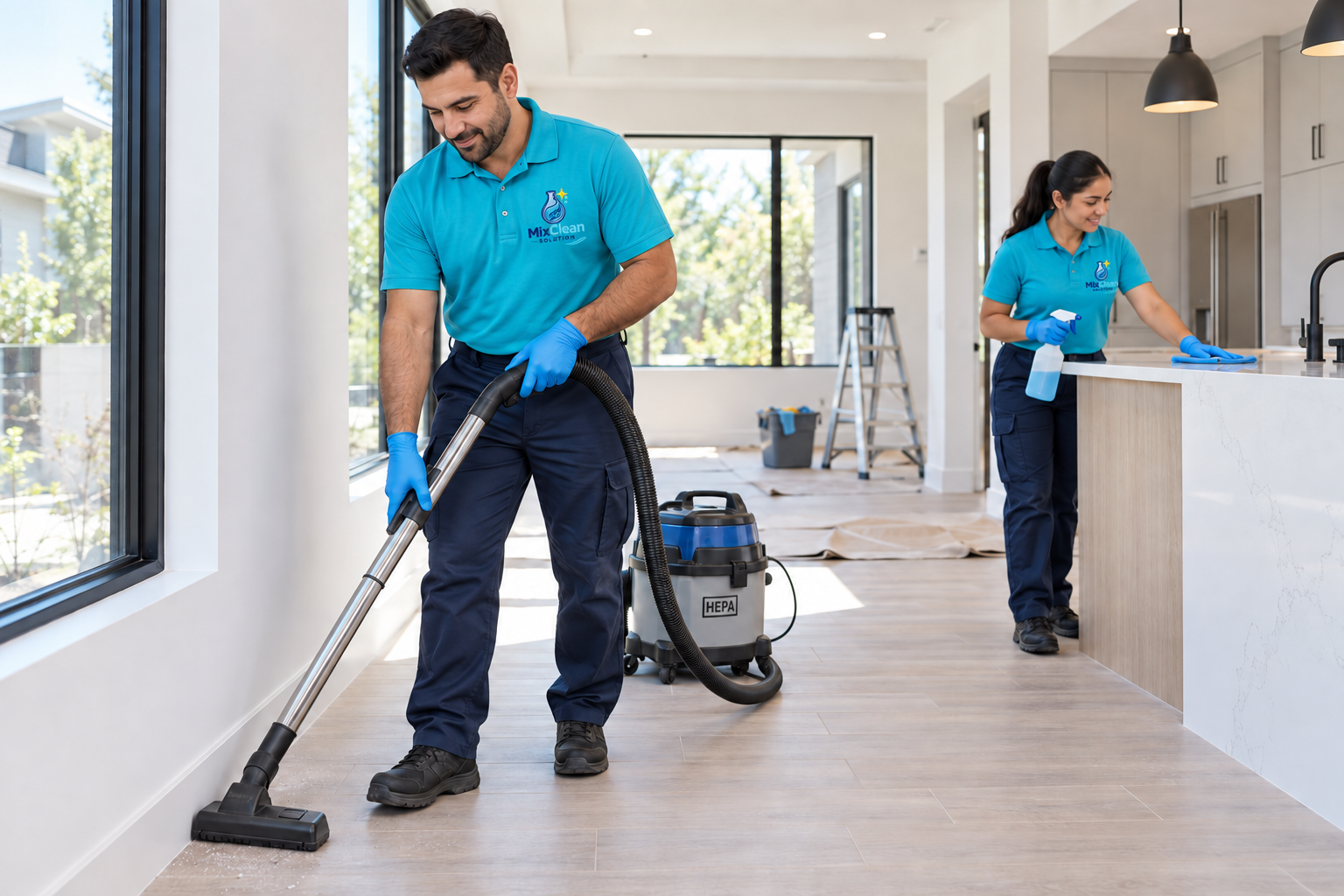
The words cleaning, sanitizing, and disinfecting are often used interchangeably, but they mean different things, and understanding the difference helps you ask the right questions about restroom care. MixClean Solution cleans and sanitizes restroom surfaces using appropriate products. This guide explains the distinctions and what to ask. To request service, use our booking form.
What cleaning means
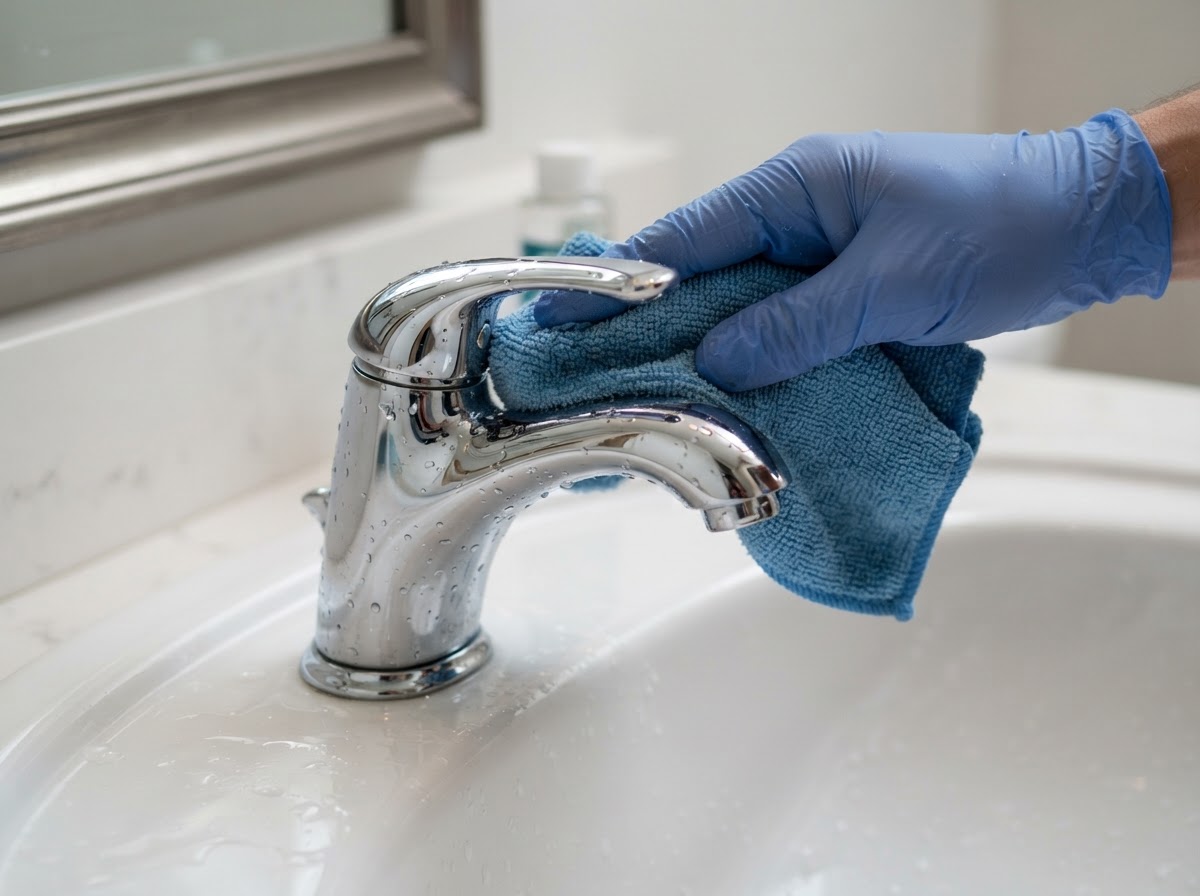
Cleaning is the physical removal of dirt, soil, and impurities from surfaces. It involves wiping, scrubbing, and rinsing to remove visible soil. Cleaning does not kill germs, but it removes many of them by physically removing the soil they live in. Cleaning is the foundation of restroom care — it makes surfaces visually clean and prepares them for sanitizing or disinfecting. A clean surface is easier to sanitize effectively because soil can interfere with sanitizers and disinfectants.
What sanitizing means
Sanitizing reduces the number of germs on a surface to a level considered safe by public health standards. Sanitizers are applied after cleaning to lower the germ count. Sanitizing does not eliminate all germs, but it reduces them to a safer level. MixClean uses appropriate sanitizing products on restroom surfaces as part of the scope. The effectiveness depends on using the product according to its label directions, including contact time.
What disinfecting means
Disinfecting kills a broader range of germs on surfaces, including some that sanitizers may not address. Disinfectants are regulated products with specific label claims about what they kill, and they require specific contact times to be effective. Disinfecting is a more aggressive process than sanitizing. Whether disinfecting is appropriate depends on the product, the surface, and the situation. We do not claim medical-grade disinfection or universal product safety.
Why the words are not interchangeable
These terms describe different levels of action. Cleaning removes soil. Sanitizing reduces germs. Disinfecting kills a broader range of germs. A product that cleans does not necessarily sanitize or disinfect, and a sanitizer is not the same as a disinfectant. Using the terms correctly matters because it affects what you can expect from the service. For what our restroom scope covers, read our article on professional restroom cleaning scope.
Not medical advice or a guarantee
This information is educational, not medical advice. We do not promise germ-free rooms, disease prevention, medical-grade disinfection, or a percentage kill claim without exact support. Product effectiveness depends on label directions and proper use.
What to ask about restroom care
Useful questions include: Does the scope include cleaning, sanitizing, or both? What products are used, and are they appropriate for the surfaces? Are restroom cloths separate from other areas? What contact times are needed for sanitizers to be effective? These questions help you understand what the service achieves. For a planning checklist, read our article on the facility restroom cleaning checklist. For the broader category, see our specialized cleaning service page.
Contact time and product labels
Sanitizers and disinfectants require specific contact times to be effective. Contact time is the period a product must remain wet on a surface to achieve its stated effect. Product labels specify contact times, and following them is essential for the product to work as intended. We follow label directions for the products we use and confirm which products are appropriate for your surfaces in the scope discussion.
Frequently asked questions
This article provides general cleaning-planning information. Suitable methods depend on the material, product instructions, and site conditions. Confirm the requested scope and any preparation guidance with MixClean Solution. Follow applicable manufacturer care instructions. Cleaning results vary with surface condition and use.